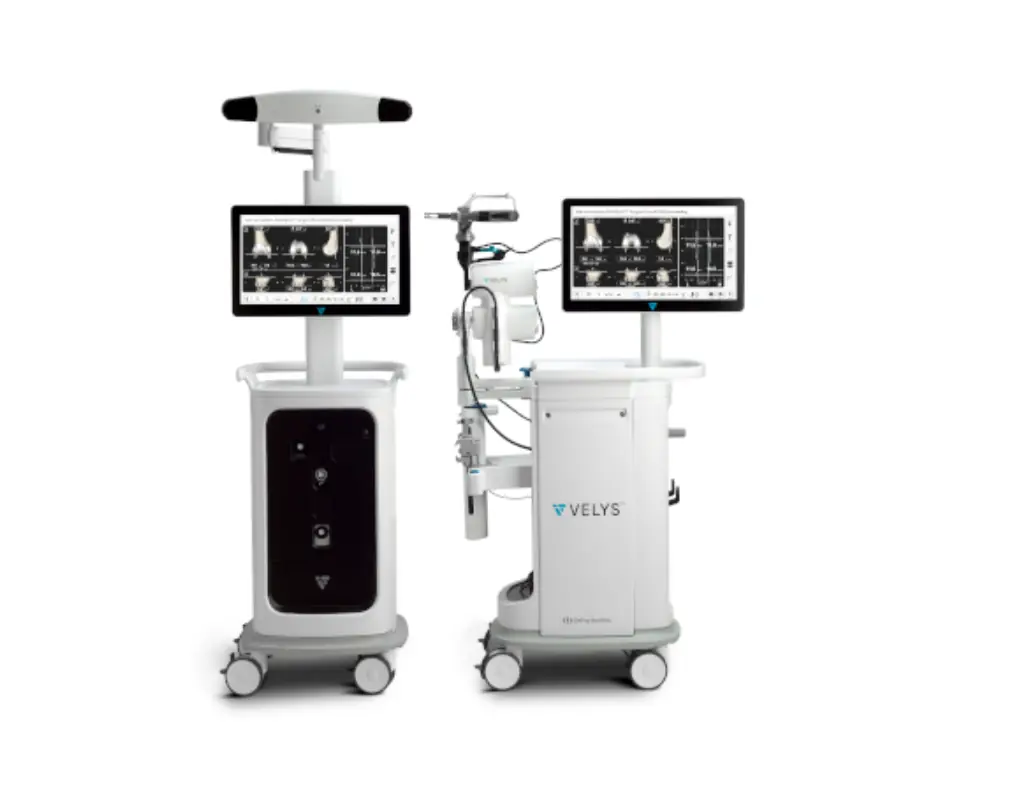
Robotic-Assisted Orthopedic Surgery Systems at SP Medifort Hospital
At SP Medifort Hospital, advanced orthopedic care is supported by robotic-assisted surgical systems that enhance precision, consistency, and personalization in joint replacement procedures. These systems are designed to assist surgeons in performing complex knee replacement surgeries with greater accuracy while preserving natural anatomy and soft tissue balance.
Robotic-assisted technology represents a significant advancement in modern orthopaedics, combining digital planning, real-time intraoperative data, and surgeon-controlled execution to improve surgical outcomes.
Understanding Robotic-Assisted Joint Replacement
Robotic-assisted orthopedic systems are used primarily in total and partial knee replacement procedures. Unlike conventional techniques that rely solely on manual instrumentation, these systems provide:
- Real-time anatomical mapping during surgery
- Digital planning based on the patient’s unique knee structure
- Intraoperative feedback on alignment, balance, and joint movement
Importantly, these systems are imageless, meaning they do not require preoperative CT scans, reducing radiation exposure while still delivering highly accurate surgical guidance.
Precision Through Real-Time Digital Guidance
Robotic-assisted systems continuously track the position of the knee throughout the procedure, helping surgeons:
- Plan precise bone cuts
- Achieve optimal implant alignment
- Balance ligaments across the full range of motion
By providing live data on joint stability and soft tissue tension, the system enables a more personalized surgical approach rather than a one-size-fits-all technique.
Supporting Both Total and Partial Knee Replacement
Modern robotic platforms are designed to support:
- Total Knee Arthroplasty (TKA)
- Unicompartmental (Partial) Knee Arthroplasty (UKA)
This flexibility allows surgeons to select the most appropriate procedure based on the patient’s condition, preserving healthy bone and tissue whenever possible. Robotic guidance is particularly valuable in partial knee replacement, where accuracy and visibility are critical due to smaller surgical exposure.
Designed Around the Surgeon’s Workflow
Unlike autonomous robots, robotic-assisted orthopedic systems are surgeon-controlled tools. They are designed to integrate seamlessly into the operating room without disrupting established surgical workflows. Key advantages include
- Table-mounted or compact designs that fit standard operating theatres
- Intuitive interfaces that allow rapid intraoperative adjustments
- Real-time feedback without increasing surgical complexity
This design philosophy ensures that technology enhances, rather than replaces, the surgeon’s expertise.
Benefits for Patients
For patients undergoing knee replacement surgery, robotic-assisted technology can offer:
- More accurate implant positioning
- Improved joint stability and movement
- Reduced risk of alignment-related complications
- Potential for faster recovery and improved long-term function
Clinical studies and real-world usage have associated robotic-assisted knee replacement with improved outcomes and more consistent results compared to conventional techniques.
Enabling Personalized Orthopedic Care
Every patient’s anatomy and movement patterns are unique. Robotic-assisted systems allow surgeons to tailor the procedure to each individual by:
- Evaluating knee movement dynamically during surgery
- Adjusting plans in real time based on ligament behavior
- Optimizing implant placement to restore natural knee function
This level of personalization supports better functional outcomes and higher patient satisfaction.
A Tool That Complements Surgical Expertise
At SP Medifort Hospital, robotic-assisted orthopedic systems are used as precision tools guided entirely by experienced surgeons. While technology provides enhanced visualization and data, surgical decisions remain firmly in the hands of trained orthopedic specialists.
Our approach ensures that patients benefit from both advanced technology and clinical judgment, delivered within a safe, ethical, and patient-centric care environment
 Loading...